Christmas gift planning gets easier when you stop trying to find the most impressive object in the room and start managing three kinds of uncertainty: how well the gift fits the recipient, what role it plays in your budget and whether it can reach the right place at the right time.
That order matters. A generous budget cannot rescue a poor match. A brilliantly chosen gift is less brilliant if it is travelling to an empty house. And "something funny" can cover everything from a delightful desk distraction to an object destined for the back of a cupboard, where novelty gifts go to contemplate their choices.
The strongest Christmas list is therefore not the longest or most inventive. It is the one that matches each gift's ambition to how much you know, how much you want to spend and how complicated the handover will be. Begin with the recipient's real life, give the purchase a clear job, then treat delivery as part of the decision rather than an administrative detail.
That approach turns browsing into useful discovery. You can explore the LatestBuy gift guide without asking every category to solve every recipient. Instead, each click tests a promising idea: practical or playful, individual or shared, modest or substantial, easy to hand over or worth planning early.
A Christmas list should measure uncertainty, not merely record names
Most Christmas lists begin as names followed by numbers: "Mum - $80", "office exchange - $25", "cousins - somehow all of them". This records spending, but it says almost nothing about choosing. The better version adds one ordinary-life clue and one logistical fact.
"Mum - hosts family lunches, enjoys useful kitchen details, travelling before Christmas" is a real buying brief. "Office exchange - public opening, mixed-age team, limited knowledge of recipient" is another. The gift does not appear magically, but whole sections of the internet can now be dismissed with a cheerful wave.
For each recipient, write down three things:
- A routine or occasion - what they do at home, at work, while travelling or when friends visit.
- The gift's role - main present, small personal gesture, group contribution, shared household gift or light-hearted exchange.
- The handover route - given in person, sent directly, carried on a trip or needed before an earlier family gathering.
These notes reveal where the real risk sits. Someone you know well but must post to an uncertain address has a logistics problem. A colleague you barely know but will see in person has a recipient-fit problem. A large extended-family list may be less about ideas than protecting the total budget from dozens of "just one more thing" moments.
Prioritise accordingly. Start with gifts involving travel, specialist interests, unfamiliar recipients or significant spend. Leave straightforward in-person gestures until later. This reverses the tempting habit of buying the easiest gifts first simply because crossing names off feels productive.
When a recipient is still too vague, a broad gift discovery page can help - but browse with a sentence in mind. "Something for a person who enjoys hosting" is useful. "Something unique" is not a brief; it is a trapdoor into three hours of tabs.
Recipient fit lives in ordinary routines
Age and relationship labels are convenient, but they are blunt instruments. Two siblings of the same age may have completely different ideas of a good Saturday. One wants everyone around the table; the other considers cancelling plans a successful hobby. Their gifts should not come from the same mental bucket.
Routine is more revealing than stereotype. Look for what the recipient repeatedly uses, talks about, maintains, hosts, carries, displays or complains about. Complaints are particularly helpful. "My charging cable never reaches", "we need something to do after lunch" and "I can never find that tool" are tiny unsolicited gift briefs hiding in normal conversation.
Different relationships require different evidence:
- Close family and partners can support greater specificity because you may know their habits, tastes and current frustrations. Even here, avoid assuming that closeness gives you perfect knowledge. Clothing sizes, technical compatibility and highly personal hobby choices still deserve checking.
- Households and hosts often suit gifts connected to a shared occasion: preparing food, serving drinks, relaxing outdoors or entertaining visitors. The best household gift has an identifiable moment of use. "For summer lunches on the patio" is stronger than "for the home".
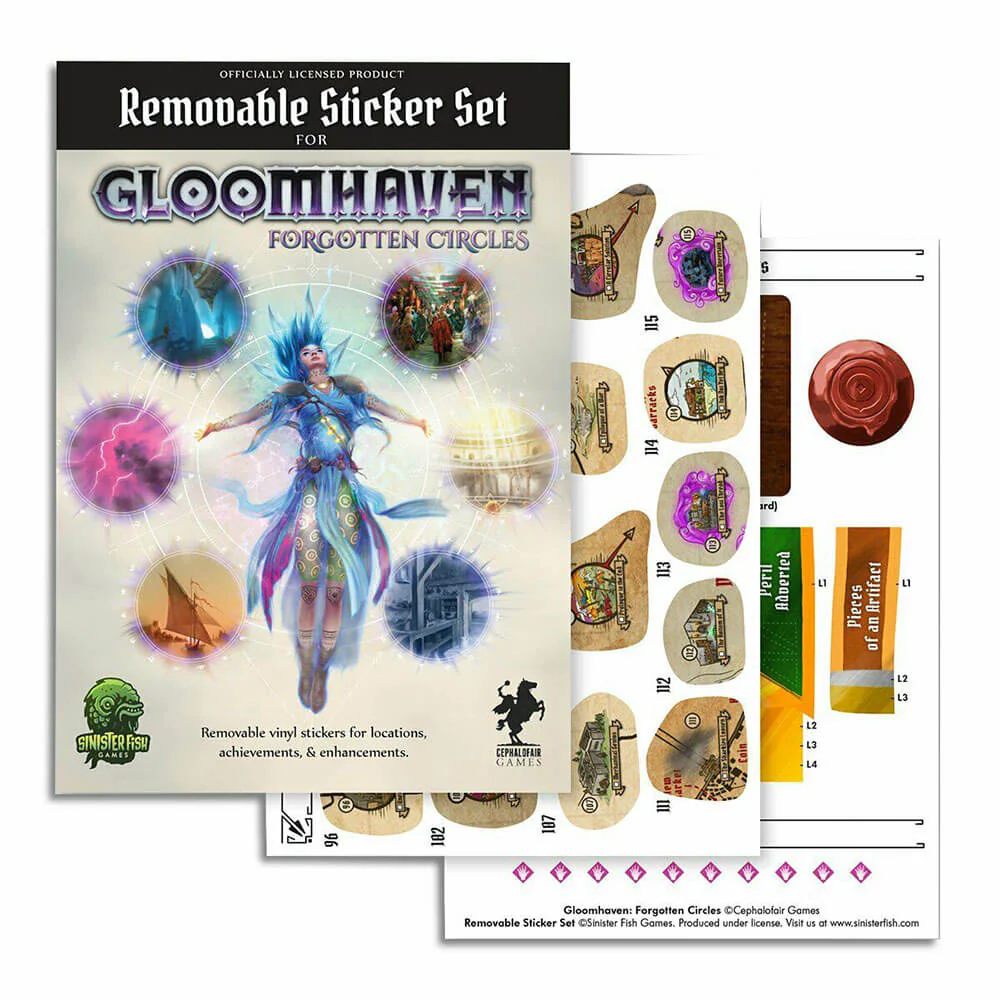
- Families who enjoy doing things together may get more value from a shared activity than several small objects. When exploring Family Games, think about player count, age suitability, attention span and the household's tolerance for complicated rules. Some families adore a strategic marathon; others need something explained before the pavlova disappears.
- Colleagues, teachers, neighbours and extended family usually call for lower personal intensity. Favour gifts that can be opened publicly, do not comment on appearance or habits and do not create an obligation. Risqué humour, strong scents and emotionally loaded keepsakes all require more recipient knowledge than a casual relationship provides.
- Children and teenagers need more than an age label. Check interests with a parent or guardian, read product guidance and consider household rules, storage and supervision. A gift that creates noise, mess or a lengthy assembly project is also a gift for the adults living nearby.
- Fans and collectors reward precision but punish guesswork. Confirm the exact series, character, format or collecting style; consider duplicates, display space and whether they keep items boxed or use them. "Likes science fiction" is not enough evidence for a highly specific collectible. One fan wants a subtle desk reference; another has a shelf plan with the organisational intensity of air-traffic control.
For practical categories such as electronics and gadgets, recipient knowledge should include compatibility and effort. Will it work with what they use? Does it require an app, power source, installation or technical setup? Does it solve a problem they actually have? Interesting technology is not automatically useful technology.
When information is thin, choose by setting rather than identity. Think "desk", "kitchen", "game night", "summer outing" or "travel bag". A setting gives the gift somewhere to belong. That is often enough to make a broad category feel personal without pretending you have decoded the recipient's soul from two family barbecues and an Instagram post.
A budget works best when every gift has a job

Budgeting is sometimes treated as the unromantic part of Christmas, as though generosity only counts when it arrives without arithmetic. In reality, a clear budget makes thoughtful choices more likely. It prevents one early purchase from quietly eating the funds intended for five other people, and it reduces the temptation to compensate for uncertainty by buying more.
Set the total Christmas budget before setting individual amounts. Include wrapping, postage and any group contributions, then decide which relationships or occasions call for larger, smaller or shared gifts. Equal spending is not always necessary; coherent spending is. A main household present and a modest office exchange are doing different jobs.
At the smaller end of the budget, discipline matters more than volume. One compact object with a clear use or joke is usually better than several filler items. The gifts under $30 path is most useful when you apply recipient logic first: a small kitchen helper for someone who cooks, a desk item for a colleague, a travel-sized activity for a family trip or a restrained novelty for a person whose sense of humour you understand.
The risk at this level is buying purely for immediate visual impact. A cheap laugh can be worthwhile when the exchange itself is the occasion, but it should not be confused with long-term usefulness. Ask what you want the gift to do after it is opened. Start a game? Improve a small daily routine? Sit proudly on a desk? Become the recurring joke at family lunch? If the answer is "exist near the recycling bin", keep browsing.
A moderate budget allows more specificity, but not necessarily more items. This is where a well-matched category often beats an assortment. Spend can support better materials, a more substantial activity or an object tied closely to a hobby - but only if you understand the recipient well enough to choose confidently.
Larger spending raises the consequence of getting the details wrong. It can introduce compatibility, storage, care and personal-taste risks. Before committing, confirm specifications discreetly or invite input from someone close to the recipient. Surprise is enjoyable; expensive confusion less so.
Shared gifts can also stretch a budget without feeling diluted. A family game, entertaining accessory or household item may create more use than several unrelated presents. The important distinction is intention: a shared gift should genuinely suit the group, not be a household purchase wearing a Santa hat.
The practical-versus-playful divide is mostly a mirage

Gift guides often place practical and playful ideas on opposite sides, as if one belongs in a toolbox and the other has escaped from a novelty aisle. Strong gifts frequently do both. A practical object can show personality, while a playful gift can earn its place through repeated use.
The real divide is between gifts with a plausible future and gifts chosen only for the opening moment.
A practical gift earns its keep by solving a recognisable problem. It may help in the kitchen, improve a desk, make travel easier or support an existing routine. Its risk is impersonality. If the same object could be handed to any adult without changing the explanation, add context: why this use, for this person, now?
A playful gift earns its keep through amusement, conversation, nostalgia or shared participation. Its risk is misjudged tone. Humour depends on who is present, how well you know the recipient and whether the joke remains funny once the unwrapping audience has dispersed. The recipient should enjoy the gift, not merely survive being the punchline.
Nostalgia sits neatly between the two. It can make an ordinary item feel personal or turn a display piece into a memory cue. Yet nostalgia needs precision. Choose something connected to an era, character or interest the recipient genuinely values, rather than assuming everyone wants a physical reminder of every cartoon they watched before school.
A few trade-offs help keep the balance:
- Choose more practical when recipient knowledge is limited, the relationship is formal or the object solves a clearly observed problem.
- Choose more playful when the recipient actively enjoys novelty, the occasion is social and the humour can be understood without an explanatory seminar.
- Choose more sentimental when the relationship can carry emotional weight and the meaning will be obvious to the recipient.
- Choose more specific only as your evidence improves. Deep hobby and collector gifts are rewarding precisely because detail matters.
Popularity can be a useful clue when you need orientation. Browsing top-selling gifts may show what kinds of ideas other shoppers are exploring, but popularity does not replace fit. Treat it as a starting signal, then return to the recipient's routine, space and personality.
This is where LatestBuy browsing should feel like a productive rabbit hole rather than homework. A game suggests a summer gathering; a gadget suggests a daily irritation it could remove; a novelty item recalls an in-joke; a nostalgic piece prompts the question of where it would live. The range becomes useful when every interesting object is tested against a real person and a real moment.
Delivery risk is part of the gift, not a checkout footnote

The Fair Work Ombudsman's 2026 public holiday list places Christmas Day on Friday 25 December 2026. That date is fixed. The path between choosing a gift and placing it in someone's hands is not.
Delivery risk includes more than transit. It can involve product processing, the destination address, recipient travel, apartment access, remote locations, bulky parcels, split-family celebrations and gatherings held before Christmas Day. It also includes the buyer's own delay-the surprisingly powerful seasonal tradition of thinking, "I'll sort that next week."
Planning early does not require buying everything immediately. It means identifying which gifts become harder to execute as time shrinks. A highly specific present for a travelling collector deserves earlier attention than a modest in-person exchange. A shared family gift needed at a gathering on 19 December effectively has an earlier event date. Your calendar should reflect when the present must be handed over, not merely when Christmas appears on the wall.
In the early planning stage, solve the high-consequence decisions. Confirm interests, technical requirements, sizes, display preferences and delivery addresses. If several relatives are contributing, nominate the person responsible for selecting, ordering, receiving and wrapping. "We thought someone else had done it" is not a festive logistics strategy.
As Christmas approaches, simplify unresolved choices. Reduce requirements that create extra failure points: uncertain sizing, specialist compatibility, complicated assembly or delivery to an address the recipient may leave. Rely only on product details and delivery information shown at the time of purchase; do not infer an arrival date from previous orders or general assumptions.
When timing becomes tight, let certainty outrank cleverness. If arrival before the relevant gathering cannot be established, consider a locally obtainable gift, an experience you can organise directly or a small in-person gesture paired with an honest note about what is still to come. A transparent placeholder preserves the thought behind the gift. A frantic random purchase merely transfers the anxiety from buyer to recipient.
It helps to prepare backups based on intent rather than object. If a particular game is unsuitable, the intent may be "something the family can do together". If a specialised gadget is too uncertain, the intent may be "make their workspace more comfortable". If a collector item carries duplicate or display risk, the intent may be "recognise an interest they care about". Preserving the reason for the gift keeps the second choice from feeling arbitrary.
Also decide what not to risk. Do not send highly personal gifts to unconfirmed addresses. Do not choose bulky objects without considering storage and transport. Do not rely on humour when someone else will receive or open the parcel. Do not make a child's present depend on an adult completing an unexpected technical project on Christmas morning.
The argument running through all of this is simple: Christmas gift planning is not a hunt for universally brilliant products. It is the art of making the level of surprise proportionate to your knowledge, the spend proportionate to the gift's role and the logistics proportionate to the time available.
Choose the person before the category, the purpose before the price and the handover before the last minute. Do that, and Christmas shopping becomes less of a seasonal ambush - and much more like a genuinely enjoyable browse.
For the next browse step, compare the fit against electronics and gadgets and Family Games.